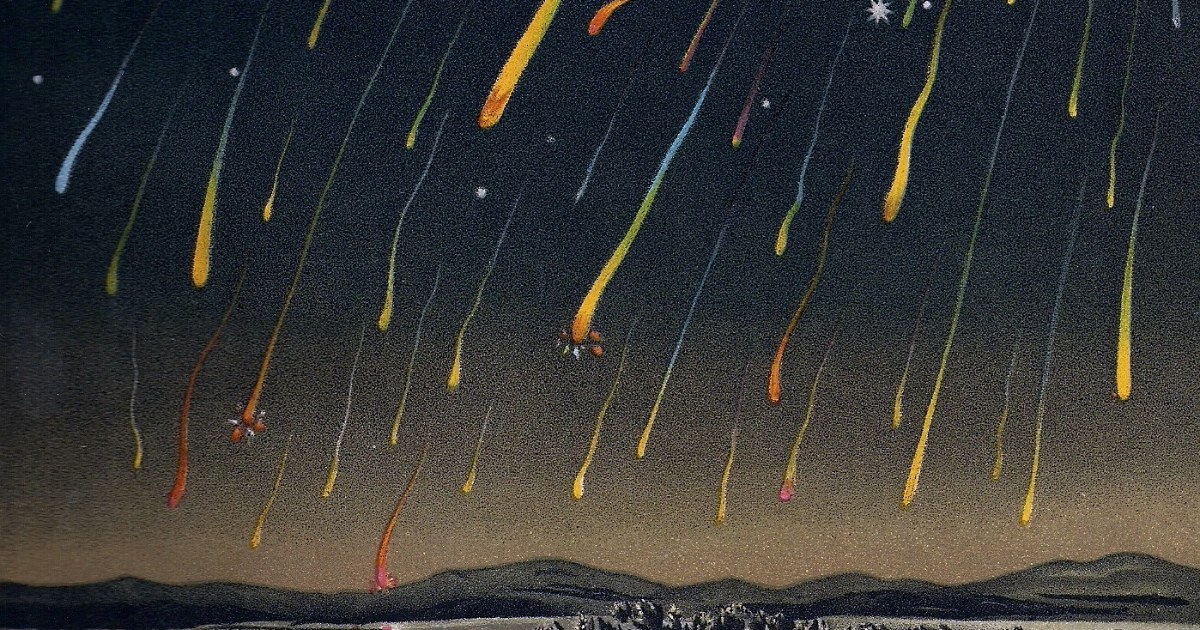
Leonids: look up on the night of 17 to 18 November
Every November, Earth passes through the dust left by comet 55P/Tempel-Tuttle: these are the Leonids, among the fastest meteors of the year (71 km/s). The peak falls on 17 November, so the best night for Europe is Tuesday 17 to Wednesday 18 November.
When to look?
- The first-quarter Moon sets around 11:30 pm: the sky is dark afterwards.
- The radiant, in Leo, rises in the east around 10:30 pm.
- Best window: 2:00 to 5:30 am, when Leo is high in the sky.
How many meteors?
About 15 per hour under ideal conditions. Under a typical country sky, expect around ten. It is not a big show, but Leonids are fast and sometimes leave beautiful trails. The shower stays active until 30 November: if your sky is cloudy on the 17th, the following nights are still worth a try, with slightly fewer meteors.
How to watch?
- With the naked eye, lying down, looking at a wide part of the sky, not necessarily towards Leo.
- Give your eyes 20 minutes to adapt to the dark, and keep away from your phone screen.
- Dress warmly: November nights are cold and damp.
What about smart telescopes?
Their field of view is too narrow to aim at meteors. To photograph them, use a camera or a smartphone on a tripod, wide angle and long exposures. Your Seestar or DWARF can keep imaging in the meantime: with a bit of luck, a Leonid will cross the field of your frames.
Before heading out, check the night on the NightAstro Weather page: hourly clouds and a saturated-air alert for your location.
See you in December for the Geminids, the richest shower of the year, this time with a discreet Moon.
Clear skies and happy meteor hunting!
NightAstro